

perseverance Let me be brutally honest with you:There were days I wanted to quit. Not because I didn’t believe in empowermint.But because building anything that matters breaks you first. Late nights.No blueprint.Delays....
Read the lesson


Welcome to the empowermint blog
This blog shares practical ideas on studying, exams and mindset for school learners, university students and parents. Every post comes from more than 20 years of tutoring and is written in plain language, so you can read it in a few minutes and use it the same day.
New to the blog? Start with the seven study tips below, then browse the latest posts above.
7 proven study tips to start with
1. Start with a plan, not a feeling
Waiting until you feel like studying means waiting a long time. Decide the subject, the time and the length of each session in advance, and write it down. A plan removes the daily argument with yourself.
2. Study in 25-minute sessions
Short sessions are easier to begin and easier to repeat. Work for 25 minutes with one clear goal, then take a short break. Four sessions in an afternoon is a strong study day.
3. Practise instead of rereading
Rereading feels productive but teaches less than testing yourself. Close the book, write down what you remember, then check. Past papers and practice questions are the best form of this.
4. Space your revision
Coming back to a topic after a day, a few days and a week helps it stay. Plan short returns to old topics instead of one long last-minute session.
5. Protect your sleep
Sleep is when your brain sorts what you learned. An all-night session usually costs more than it gives. Aim for a steady bedtime, especially in exam week.
6. Put your phone out of reach
Even a silent phone pulls at your attention. Leave it in another room for the length of a session, and check it during the break.
7. Review your mistakes
Every wrong answer shows you what to fix. Keep a short list of mistakes and review it before the next paper. Mistakes are information, not failure.
How to use this blog
If you are a learner
Pick one idea a week and try it. A good place to begin is Hydrate to elevate, a short post on how simple habits help your brain.
If you are a university student
Choose posts that match your week: planning, focus or exam technique. The lessons series is a gentle place to begin.
If you are a parent
Read Why is my child struggling at school? for calm, practical ways to help without turning home into an argument.
Topics you will find on the blog
- Study methods that work for any subject.
- Exam preparation, past papers and exam-day routines.
- Mindset, confidence and handling pressure.
- Brain foods, sleep and wellbeing.
- Habits and focus.
- Support for parents and guardians.
Take the next step after reading the blog
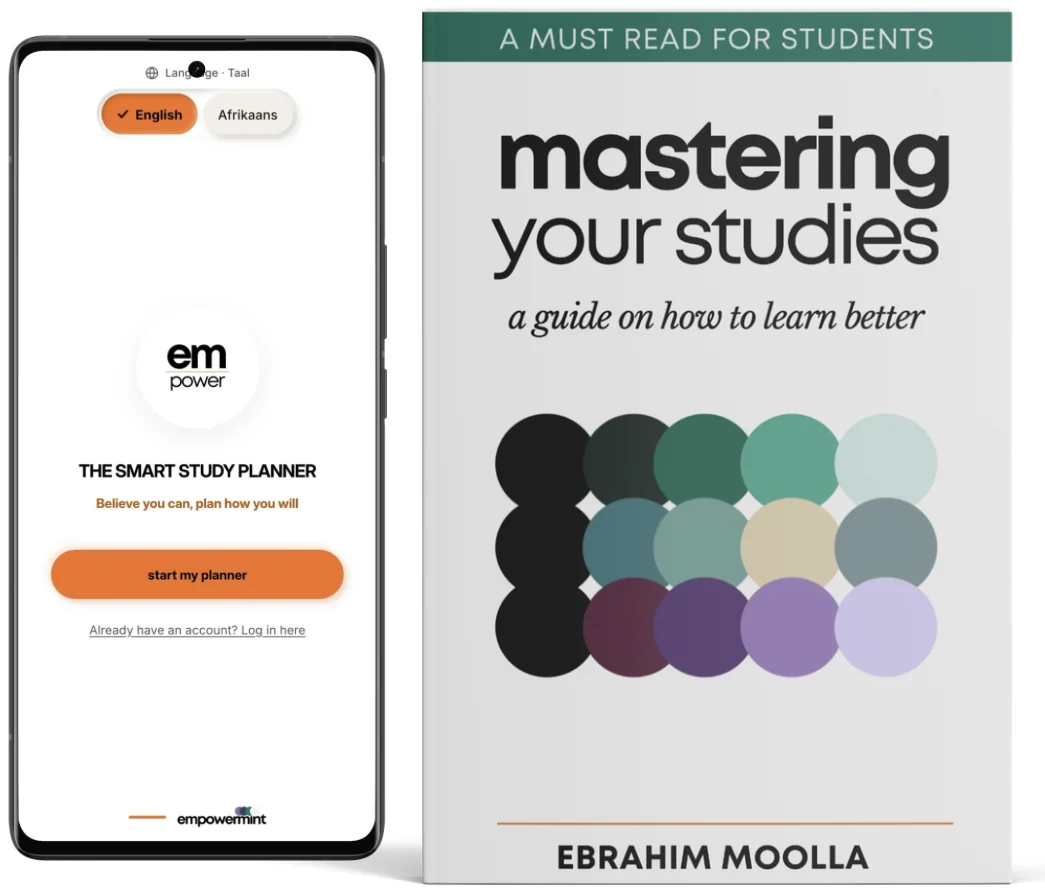
Reading is a good start, and doing is better. Turn any idea from the blog into action with the free study planner, or go deeper with the book Mastering Your Studies, which includes a free 30-page sample.
To plan around the national exams, the Department of Basic Education publishes the official timetable. And if exam stress ever feels too heavy, free support is available from the South African Depression and Anxiety Group at sadag.org or on 0800 12 13 14.
Blog questions
Is the blog free to read?
Yes. Every post on the blog is free, and you do not need an account.
Who writes the blog?
The blog is written by Ebrahim Moolla, a CA(SA) who has tutored learners for more than 20 years. You can read his story on the About page.
How often is the blog updated?
New posts are added regularly. Follow empowermint to see them as they appear.
Can I suggest a topic for the blog?
Yes. Send an idea through the contact page and it may become a future post.